
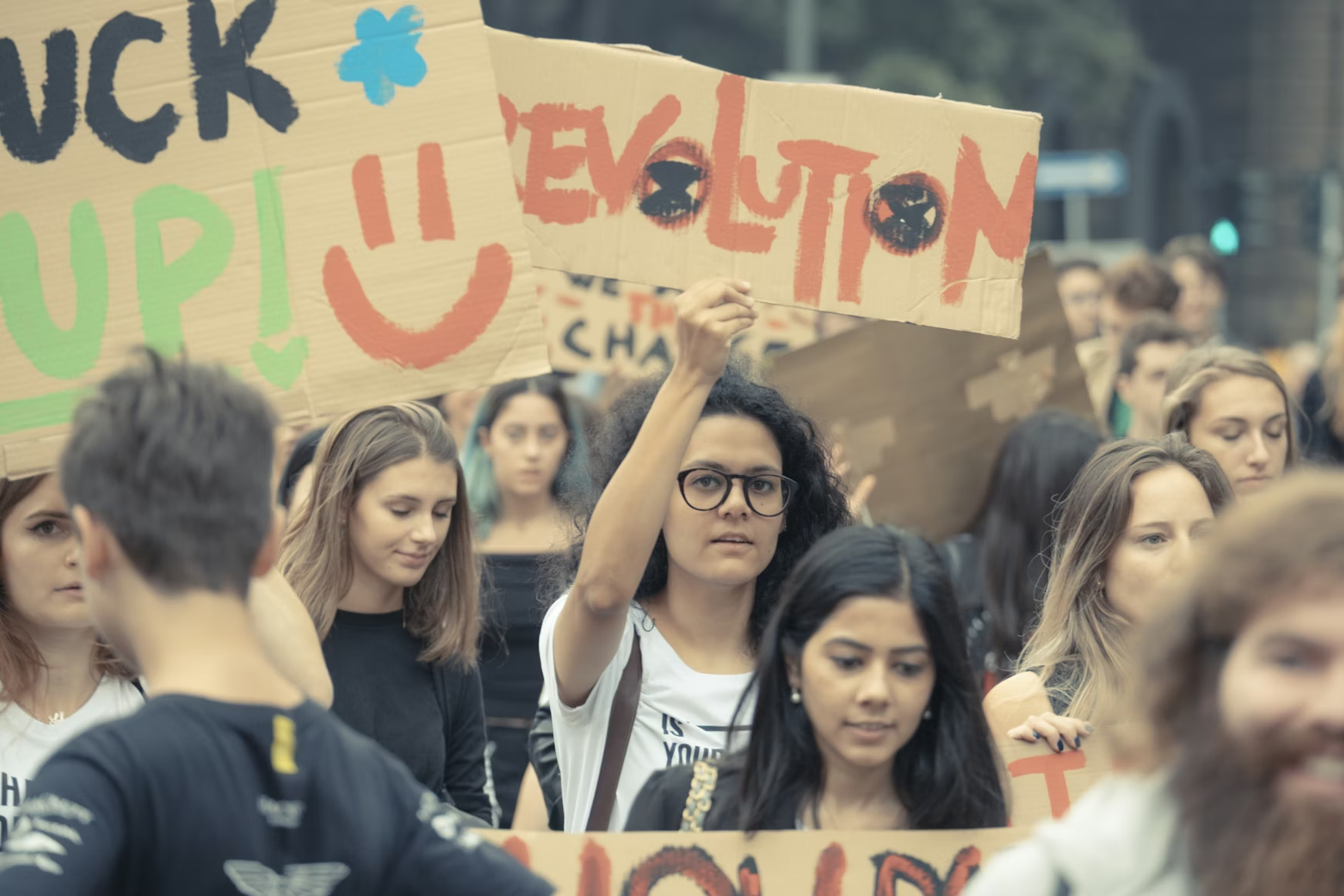
There is a common belief that young people are disengaged from politics—that they don’t vote, follow the news, or care about local political issues. But is this really the case?
Recent youth-led mass mobilizations have challenged this assumption. In fact, it is impossible to fully measure young people’s engagement in civil society based solely on voter turnout. Their contribution to democracy is far more complex and often manifests in ways that defy traditional methods of participation. Since 2019, when young people began protesting political inaction on climate change and founded the Fridays for Future (FFF) movement, it has become clear that their preferred methods of engagement often fall outside established institutions. They are taking to the streets and leveraging social media as a powerful platform for activism to express their dissatisfaction with the state of the world.
In this article, we will explore examples of successful youth-led movements that highlight the profound impact young generations can have on shaping government policies and driving societal change. Examining these youth-driven movements is crucial because many of them reveal how deeply young people are committed to addressing societal inequalities. These movements are built on principles of inclusion and participatory democracy, organizing protests, events, and debates to bring about meaningful change. Their efforts have the potential to spark democratic renewal and lead to long-term transformation, especially in areas where traditional approaches have fallen short.
Young people today are not simply participating in one-off protests; they are altering their everyday lives to reflect their values. Many adopt vegan or vegetarian diets, choose organic, fair-trade, and locally sourced products, and avoid fast fashion in favour of second-hand clothing—all ways of aligning their actions with their beliefs. This wave of activism is primarily led by Generation Z. To understand their sense of urgency, it’s important to consider the historical context in which they were raised. Gen Z grew up during the Great Recession of 2008, witnessing first-hand the struggles their families faced in securing necessities and much of their adolescence was spent in isolation due to the COVID-19 pandemic, only for them to emerge into a world where climate change poses an existential threat to their future.
Despite these challenges, most members of Gen Z are actively engaged in social or political causes. One remarkable feature of this generation is their refusal to respond to adversity with apathy. Instead, they channel their frustrations into advocacy and activism. Research shows that 70% of Gen Zers are involved in a social or political cause, even if they don’t identify as full-fledged activists.
One of the most notable examples is the Fridays for Future movement, which was spearheaded by Swedish activist Greta Thunberg. It all began in August 2018 when, at just 15 years old, Thunberg decided to sit outside the Swedish Parliament every school day, demanding urgent action on the climate crisis. Thunberg’s lone protest quickly gained momentum, inspiring young people around the world to join the cause. By September 8, 2018, Swedish lawmakers committed to a climate-safe pathway aligned with the Paris Agreement. The creation of the hashtag #FridaysforFuture catalysed a global movement, with school strikes taking place across Europe and eventually around the globe. Over the course of seven years, the FFF movement’s demands have been acknowledged by parliaments worldwide, underscoring how one individual’s determination can ignite an extraordinary collective response. Thunberg’s story proves that persistence in advocating for one’s ideals can lead to real change. No matter how dire the state of the world may seem, there is always room for improvement.
Another powerful example of youth-led activism is the March for Our Lives movement in the United States. After the tragic shooting at Marjory Stoneman Douglas High School in Parkland, Florida, students across the country rallied to demand an end to gun violence. Their vision was to create a society where gun violence becomes a thing of the past, and the use and abuse of firearms are eliminated. In 2018, the students took their message to the streets, organizing the largest single-day protest against gun violence in U.S. history. Millions of people joined the students from Florida, fed up with the constant threat of gun violence that accompanied even the most mundane activities—like going to school. Since then, the movement has been instrumental in passing over 300-gun violence prevention laws across the United States. Through their Road to Change initiative, the movement has organized rallies nationwide and conducted research to understand why gun violence is so pervasive in America with their Five Forces document. The March for Our Lives movement is a prime example of how tragedy can be transformed into a catalyst for change. It demonstrates that injustice should never be met with silence, and that no matter how deeply entrenched an issue may seem, it is always possible to challenge and change it.
As young people continue to raise their voices, initiatives like Youth DemocrAID further emphasize the importance of civic engagement. This project is dedicated to encouraging young people to take an active role in politics—from voting to participating in local community initiatives. It aims to foster dialogue and debate at the European level, focusing on the harmful effects of disengagement from democratic processes. By promoting participatory and non-formal educational methods, Youth DemocrAID is equipping the next generation with the tools and knowledge needed to make informed decisions and influence change.
The initiative utilizes podcasts and digital tools to connect young people with democratic education. As part of the project, five distinct podcasts will feature interviews with national political representatives, activists, NGOs, and community members who share their stories, creating a shared and publicly accessible library. Over the coming years, the project will expand through a network of partners from the five participating countries: Italy, Poland, Greece, Portugal, and Slovakia.
If you feel disillusioned with the state of the world, don’t stay silent. Join initiatives like Youth DemocrAID to make your voice heard and connect with like-minded individuals who are equally committed to addressing global challenges. This is the only way to create lasting, meaningful change in our society.