
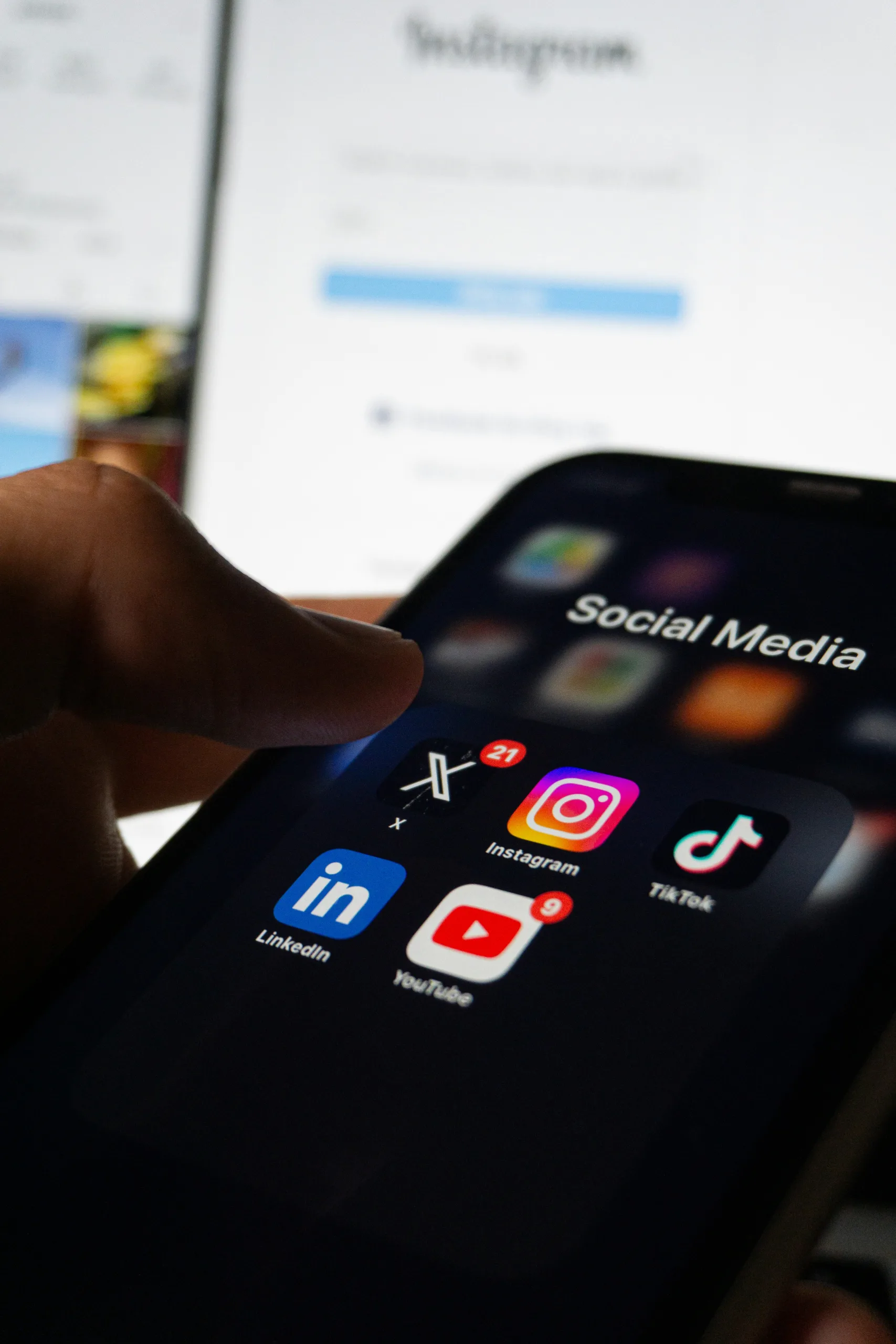
Who can claim not to have any social media presence nowadays? If you’re reading this article, chances are you have accounts on at least three different platforms. Social media has become inseparable from our daily lives—we reconnect with old friends on Instagram, stay updated on the latest news via X, and laugh at memes on TikTok.
What’s even more intriguing is that social media today is not just a hub for light-hearted entertainment; it has evolved into a vital tool for political engagement. Politicians now recognize the necessity of mastering these platforms to connect with younger voters. Data from 2020 reveals that 97% of youth aged 12-17 engaged with at least one social media site, and 70% received information about the 2020 election through these channels. [1]It’s only natural, then, for politicians to expand their social media presence to communicate their messages effectively.
However, young people don’t solely consume political content from official accounts. They also engage with posts shared by peers, influencers who specialize in breaking down current events and encouraging civic action and famous people who decide to take the stand for what they believe in. For instance, during the 2024 U.S. elections, the role of celebrities was particularly impactful. When Taylor Swift announced her support for the Democratic Party on Instagram and X, her message prompted thousands of fans to register to vote almost immediately.
Influencers often serve as trusted sources for political news because they communicate in ways that resonate with younger audiences.
Traditional media, such as television and newspapers, often struggle to engage young people. Their messaging can come across as out of touch, sometimes even criticizing youth as easily influenced or apathetic. In contrast, influencers know how to simplify complex issues and present them in relatable, digestible formats, which explains their significant influence on youth engagement.
When young people are addressed in ways they find relatable, their contributions to democracy can be transformative. The Fridays for Future movement is a prime example. Swedish activist Greta Thunberg, then a teenager, tapped into the fears and frustrations of her generation about the climate crisis. By leveraging social media, she amplified her message and mobilized a global movement, which not only brought millions to the streets but also influenced elections by empowering environmentalist parties across Europe.
The platforms most used for spreading messages are Instagram, TikTok, and X. Instagram excels at sharing infographics that spark discussions on specific topics. TikTok, especially popular since the pandemic, allows creators to post longer videos, enabling deeper dives into complex issues. X, meanwhile, remains a useful tool for directly interacting with politicians, critiquing them, or holding them accountable through public posts.
Beyond social media, other digital tools like podcasts and virtual forums are also crucial for fostering democratic engagement among youth. Podcasts, for example, can host in-depth discussions on topics relevant to young people, often featuring expert interviews. Many podcasts focus on dissecting current events in accessible language, making it easier for listeners to understand political matters compared to traditional news outlets.
Virtual forums provide another avenue for meaningful debate. These spaces allow young people to discuss pressing issues with like-minded peers, which can be difficult to do in person due to a lack of accessible venues or interested participants. Online debates also give policymakers insights into the priorities of younger voters, helping shape policies that reflect their views.
In conclusion, technology has fundamentally transformed how young people interact with political issues. Youth now learn about current events through social media, then translate that knowledge into action by voting or advocating for change. This demonstrates that the digital world can be a powerful tool for increasing youth participation in democracy. To maximize its potential, those who seek to involve young people in civic life must harness platforms like social media, podcasts, and virtual forums in ways that captivate and inspire.
This is precisely why the Youth DemocrAid project was created. The initiative utilizes podcasts and digital tools to connect young people with democratic education. As part of the project, five distinct podcasts will feature interviews with national political representatives, activists, NGOs, and community members who share their stories, creating a shared and publicly accessible library. Over the coming years, the project will expand through a network of partners from the five participating countries: Italy, Poland, Greece, Portugal, and Slovakia.
Through this project, young people will have the opportunity to engage with politics by fostering the exchange of ideas and facilitating debate at a European level about the negative impacts of youth disengagement in democratic processes. The primary goal of the project is to raise awareness about this issue by promoting participation and employing methods of informal education.
While the digital realm offers immense potential, it’s essential to use it responsibly to prevent issues like misinformation. With projects like DemocrAid, we can ensure that digital engagement becomes a force for good. Embracing these tools is the way forward—we just need to learn how to use them effectively!
Bianca Finessi, student of the University of Bologna.
Reference
1) Fletcher I (2023, October 3). “Increase in social media use spurring youth political engagement”, Diplomatic Courier.