
Tag: European Union

  • Empowering Young Voices: Democracy in Action at Liceo Laura Bassi

    Empowering Young Voices: Democracy in Action at Liceo Laura Bassi

    Empowering Young Voices: Democracy in Action at Liceo Laura Bassi

    We had the opportunity to visit Liceo Laura Bassi to introduce our project, Youth DemocrAID: Education, Debate, Action, through a series of interactive workshops aimed at promoting youth engagement and democratic values. In total, we conducted four workshops, each focused on a different topic but all united by a common goal: empowering young people to actively participate in democratic life.

    We began with a session on Ethical Standards and European Values, which served as a set of shared guidelines for how the workshops would be conducted — promoting respect, inclusivity, and open-minded dialogue. Following this, we introduced the CERV program (Citizens, Equality, Rights and Values), providing context for the European framework supporting our work. After that, we presented the Youth DemocrAID project, outlining its goals of education, debate, and action for empowering young people in democratic participation.

    Community Action and Grassroots Initiatives

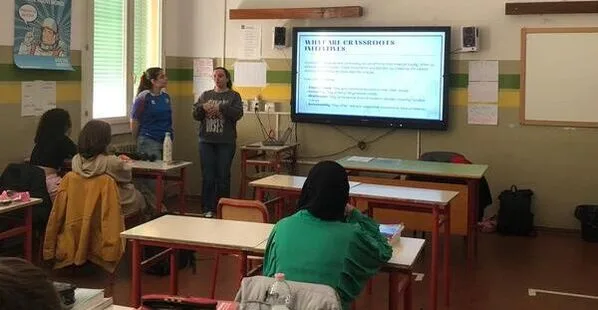
    Under this theme, students took part in a dynamic activity called “Map of Change.” They identified key issues affecting their communities, explored their root causes and consequences, and reflected on how these challenges impact their daily lives.

    We then moved to “From Idea to Action,” where students worked in teams to turn their ideas into real action plans. They organized their proposals into clear steps and presented them to the class for discussion and feedback.
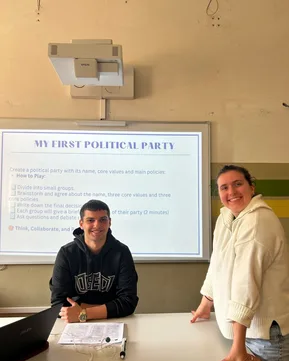
    Two workshop participants posing for the photo in front of a projection of a slide presentation.

    Youth and Civic Engagement

    We kicked off this workshop with an energizer to boost motivation, followed by the activity “My First Political Party.” Students created fictional political parties, including names, core values, and main policy ideas. This helped them better understand how political ideologies are formed and how parties represent different viewpoints in a democracy.

    We wrapped up with “Political Compass,” a quiz covering social and economic questions. Students reflected on their answers to discover where they stand politically and which ideologies align with their views. It was a fun and thoughtful way to explore personal beliefs and political positioning.

    Political Participation and Advocacy

    We started with a brief theoretical introduction, emphasizing how political participation strengthens democracy and shapes political awareness. Students learned about both conventional forms (like voting or joining parties) and unconventional ones (like protests and online activism).

    Next, we played a “Mind Game” where students created a crossword using the phrase “POLITICAL PARTICIPATION,” brainstorming words and ideas connected to political life.

    Then we tested their knowledge through a Kahoot quiz about the political systems in Italy and the European Union. We closed the session with “Speed Debating,” where students rotated tables to discuss a range of political topics. This helped them practice expressing their opinions, listening to others, and thinking critically.
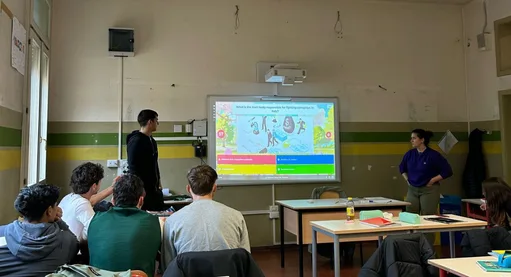
    Back view of projected presentation in the center with two workshop participants, one standing on each side, and four sitting in front.

    Introduction to Democracy and Citizenship

    In our final workshop, we introduced the basics of how democracy works in Italy and invited students to share their knowledge. Using Mentimeter, we collected their opinions on the current state of democracy in their country.

    We ended with a game called “Be a Fake News Content Creator.” Students analyzed various news stories, learning how to distinguish between real and fake information. The activity highlighted how misinformation can harm democratic processes and the importance of media literacy.
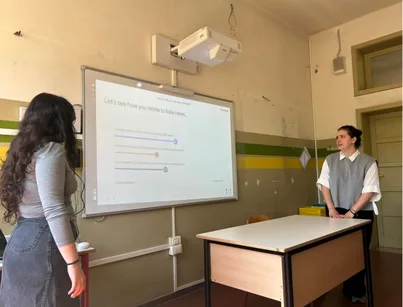
    Projected presentation with two workshop participants, standing on each side.

    Throughout the sessions, we encouraged students to actively participate, think critically, and collaborate with their peers. Their enthusiasm and creativity were truly inspiring, and it was exciting to witness their engagement in shaping positive change within their communities.

    These workshops reaffirmed the importance of fostering youth-led initiatives and equipping young people with the tools to turn their ideas into meaningful action. We’re proud to support a generation that is ready to make a difference.
  • Representation and Leadership: The Role of Women in Contemporary Politics

    Representation and Leadership: The Role of Women in Contemporary Politics

    Representation and Leadership: The Role of Women in Contemporary Politics

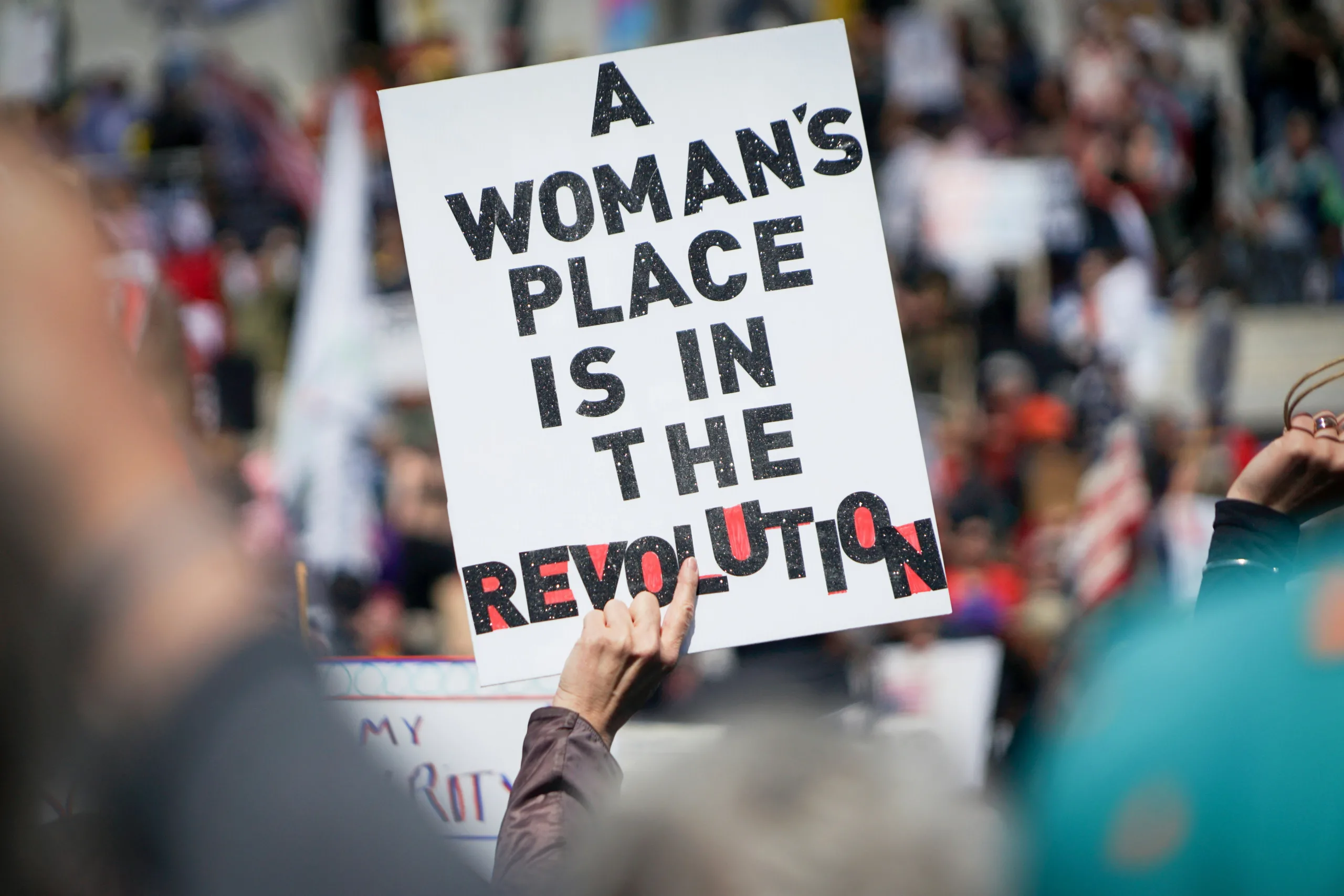
    In the majority of societies across the world and history, women have not played an important role in democracy. Throughout history, women have not been recognized as important figures due to the patriarchal structures that dominated many societies, which relegated them to domestic roles and limited their participation in public life.

    This, combined with restricted access to education, gender stereotypes that viewed them as “less capable”, exclusion from positions of power and a lack of historical documentation, contributed to their achievements being minimized or ignored.

    Nevertheless, the change started in 1791 with the French Revolution when women not only made a great impact but also they demanded a legal reform. Women played a fundamental role in the French Revolution, promoting legal and social reforms, fighting for equal rights and actively participating in political and social transformation, although they did not achieve all their objectives at that time.

    This mobilization helped lay the groundwork for future movements that would seek women’s rights. That’s because the real difference would not come until the XIX century when suffrage was a real thing and later when they have gone from being individuals devoted to family life and procreation to actively joining and becoming involved in the political life of the country. Therefore, women’s participation is key to democracies, as they need women to preserve their authenticity, and women need democracy to change the systems and laws that prevent them and society as a whole from achieving equality.

    Feminist leadership has not been easy, it has come a long way to achieve it and there are still obstacles that limit its progress towards true and complete gender equality in positions of power. However, the statistics are growing on their way to development. Since 2014 to 2024, the percentage of women holding seats in national parliaments has increased 5,6%. And regarding national governments they have experienced an increase of 7,4%.

    Despite that progress there are some countries that have not grown that much so it’s a long journey to equity yet. As we move forward in 2025, the data obtained reflect both progress and barriers that persist and face women in today’s world.

    Right now, women have managed to break barriers and occupy leadership positions that had historically been denied to them, but the situation of female leaders in Europe remains a minority on the continent. Of 50 countries, only 15 have a female prime minister or head of state, excluding monarchs.

    There are numerous examples of women who have broken stereotypes and built outstanding political careers, dedicating their work to the fight for women’s rights and gender equality:

    Bibiana Aido, Spanish PSOE politician:

    Aído is a Spanish politician from the PSOE. Since January 2017, she has been the representative of UN Women in Ecuador. She was Minister of Equality of the Government of Spain from April 2008 to October 2010. In the following legislature, this ministry was integrated into the Ministry of Health, Social Policy and Equality, so Aído was Secretary of State for Equality until July 22, 2011, when she left her post to join UN Women as a special advisor in September of that year. She thus became the youngest minister up to that time: she was 31 years old when she took office.

    Roberta Metsola, Maltese lawyer and politician:

    She is a Maltese lawyer and politician specialising in European politics. She has been the President of the European Parliament since 18 January 2022. Since 11 January 2022, she assumed the interim presidency following the unexpected death of David Sassoli and is the third woman to hold the presidency of this institution after Simone Veil and Nicole Fontaine. She is also the youngest person to hold the presidency of the European Parliament and has been a Member of the European Parliament since 2013, re-elected in 2019. Also, in October 2020, Metsola assumed the first vice-presidency of the European Parliament.

    Emma Bonino, Italian politician:

    She is an Italian politician and member of the Italian Parliament. She is known for her Europeanism and her defence of women’s rights. Between 1995 and 1999 she was European Commissioner for Fisheries and Humanitarian Aid in the Santer Commission. She also worked especially on campaigns against female genital mutilation, the rights of Afghan women and the fight against child prostitution and in 1998 she received the “Prince of Asturias Award for International Cooperation”. In 2013-2014 she was Minister of Foreign Affairs of Italy.

    Élisabeth Borne, a French civil engineer and politician:

    She is a French civil engineer and politician who served as Prime Minister of France from 2022 to 2024 and is a member of the La République en Marche (LREM) party. She was Minister of Labour, Employment and Integration from 2020 to 2022; Minister of Ecological and Inclusive Transition from 2019 to 2020; and Minister of Transport from 2017 to 2019. In addition, she was Prime Minister of France from 16 May 2022 to 8 January 2024, becoming the second woman to hold the office after Édith Cresson. She declared herself a feminist and promoted measures for equal pay and the fight against gender violence.

    Manuela Carmena Castrillo, Spanish labor lawyer, magistrate, judge emeritus and politician:

    She is a Spanish labor lawyer, magistrate, judge emeritus and politician who was mayor of Madrid from June 2015 to June 2019. Prior to entering municipal politics, she also served as a member of the General Council of the Judiciary between 1996 and 2001. She fought for women’s rights and promoted gender equality in local politics.

    Sanna Mirella Marin, finnish politics:

    She is a Finnish politician who was Prime Minister of Finland from December 2019, and Chairwoman of the Social Democratic Party of Finland from August 2020 to 6 April 2023. Following the 2023 Finnish parliamentary election, in which the SDP came third, the Marin government formally resigned. She had previously served as Minister of Transport and Communications, from June to December 2019. She was the youngest head of government in the country’s history. Since retiring from politics in 2023, she has worked as a consultant for former British Prime Minister Tony Blair’s Institute for Global Change.

    To sum up, the rise of women in politics is the result of progress in education, policy reforms, and activism. Education empowers women with the skills and confidence to lead, breaking stereotypes and fostering future female leaders. Policy changes, such as gender quotas and equal pay laws, have created opportunities for women to access leadership roles. Meanwhile, activism has driven these changes, challenging biases and advocating for greater representation.

    While progress has been made, challenges remain. Continued efforts in education, legal reforms, and activism are essential to achieving true gender equality in politics.