Introduction
This workshop is dedicated to Youth and Civic Engagement. It aims to explore how young people, aged between 15 and 25, can become active participants in democratic life by understanding political ideologies, forming opinions, and engaging in structured debate. As part of the Youth DemocrAID project within the CERV programme, this workshop promotes inclusive citizenship and active political participation.
Across Europe, many young people feel disconnected from political life. Education systems often fail to provide interactive civic education, and youth voices are frequently underrepresented. This workshop uses non-formal education methods to bridge that gap—providing hands-on experiences that help young participants build confidence, awareness, and motivation to become involved citizens.
What is civic engagement?
Civic engagement refers to individuals’ active involvement in the life of their communities and in the political processes that shape them. For youth, it can mean voting, participating in student councils, contributing to local decisions, or even organizing new initiatives. It also involves understanding the systems of governance and realizing that they have the right—and the power—to influence decisions that affect their lives.
The workshop highlights the importance of civic education not as a passive subject, but as a dynamic experience. Through activities like political party creation and ideological reflection, participants learn that civic life is accessible and meaningful, and that young people are key to democratic sustainability.
Youth leadership: becoming politically aware
Youth leadership is not just about taking charge—it’s about developing political awareness, articulating values, and engaging with others through dialogue. This workshop helps participants step into leadership roles by imagining themselves as political actors. They form their own political parties, define core values, and create realistic policy proposals.
Participants also engage with the Political Compass, a tool that helps map political beliefs beyond traditional left-right divisions. Through self-assessment, discussion, and debate, they gain deeper understanding of the diversity of political thought—and where their own ideas fit within that spectrum.
Leadership in this workshop is about active listening, articulating one’s views, responding to criticism, and collaborating to build inclusive platforms. These are the leadership skills needed to navigate today’s democratic societies.
The role of political participation and active citizenship
Young people often feel excluded from formal politics, but civic participation is broader than elections. Active citizenship means engaging in political discourse, understanding rights and responsibilities, and seeking change through advocacy and collaboration.
The workshop addresses the lack of youth involvement by making politics relatable and interactive. It connects personal beliefs with broader systems of governance—local, national, and European—while encouraging respectful debate. By understanding different perspectives and the structure of political systems, participants become better equipped to participate, question, and influence.
The use of student councils and university boards as real-life examples shows how early civic involvement can lead to lasting political engagement. Participants come to see themselves not only as future voters, but as current and capable contributors to democratic life.
The goals of the workshop
- Foster civic awareness: Help young people understand civic engagement, democracy, and their role in shaping public life.
- Encourage political expression: Enable participants to articulate their values and policies by designing a fictional political party.
- Promote ideological literacy: Use the political compass to help youth understand political ideologies and where they stand.
- Develop communication and critical thinking skills: Through structured debate and presentations, improve participants’ public speaking, persuasion, and analysis.
- Empower youth to act: Strengthen motivation and agency so that young people feel confident participating in politics, whether locally or internationally.
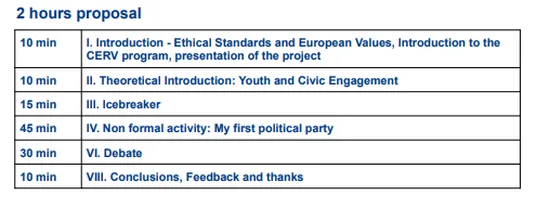
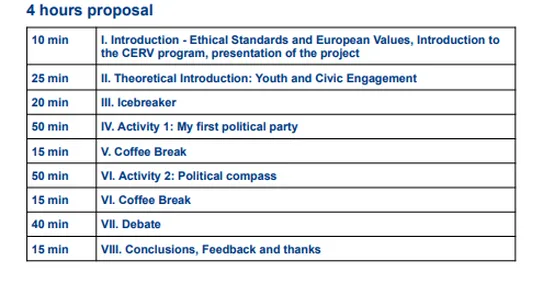
Agenda (2 proposals)